

An interview with ‘Chicken Tim’ – as Tim is locally known
How long have you been a poultry farmer and why?
I’ve been a poultry farmer now for sixteen years. Our family farm, Westleaze, is relatively small, keeping hens and becoming an egg farmer was the best way for us to make an income.
What size is your farm?
25 acres at Westleaze and we rent an additional 140 acres.
How many hens do you currently manage?
8,000 hens at Westleaze and 8,500 at Upwey.
Which breeds do you keep and why?
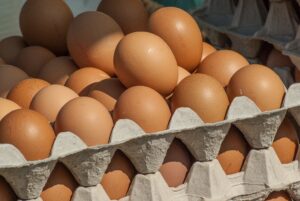
We keep Lohman Brown. They are crossbred from the Rhode Highland Red breed of hen. They are brown in colour, a highly productive layers and lay brown eggs.
How are they housed?
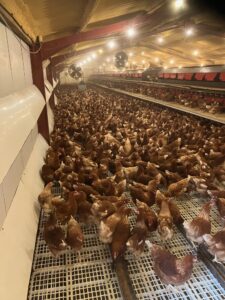
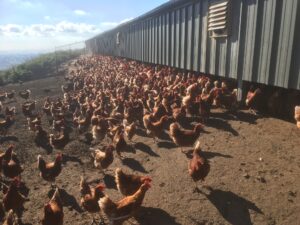
Our hens are free-range which means they have free access to pasture. They are housed in a flat deck housing system. Two thirds of the space allows them to move freely between food, water, nesting and roosting. The remainder third is their scratching area which allows them to perform natural behaviours like foraging and dust bathing which helps to maintain health and wellbeing.
What do they eat?
They eat mainly wheat. Our 16000 hens eat 2 tons a day! It is mixed with soya bean to provide protein, and limestone to provide calcium, important for strong egg shells.
What is your average daily egg production?
13-14000 eggs per day
How many people do you employ and what are their roles?
I employ 2 full time and 2 part time workers who are responsible for collecting and packing the eggs for collection by the egg packing centre in Sherborne where they are graded and stamped.
Where do you market and sell you eggs?
Our eggs are collected twice a week to be graded and stamped by our packer in Sherborne. 20% of our eggs are sold locally, the rest are sold land distributed by our packer. Most of them stay in Dorset. Our free-range eggs are sold every day via an honesty box (including Christmas) from the farm gate in both Beaminster and Upwey.
Why is it important that we eat eggs?
Eggs are a nutritional powerhouse, rich in good protein, fats and vitamins. Approximately 34 million eggs are eaten in the UK per day. 90% of them coming from the UK.
How long are the hens with you?
We buy the chick pullets at 16 weeks of age. By 20 weeks they will have settled in and will start laying eggs. They will be at peeak laying at around 24 weeks. At 45-50 weeks their laying will start to reduce. We typically keep them until they are 72 weeks (around 18 moths) old, when the production and quality of their eggs declines. The average hen will lay 320 eggs during this time. They are then sold on to Tescos for their meat. As they are free range the majority of the meat will be sold in the store as chicken breast, chicken mince or in chicken pies, etc The remainder is used for pet food.
What is a typical day in the life of a poultry farmer?
My day starts at 5.00/6.00am. I start the day walking the birds to ensure that they are all healthy and happy and there are no issues. I check the food and water feeds and look forward to the rush as I open the doors for them to roam outside.
At 8.30am the rest of the team arrive. They collect the eggs taking out those that are cracked or damaged. This can take 4-5 hours. In the winter we start collection the eggs at 7.00am and in the summer at 9.00 am. Once the eggs ate checked over they will pack them ready for collection by the packing station. They will continually walk the birds, cleaning , sterilising and checking their water. We shut them in when it starts to get dark.
You must be logged in to post a comment.